International trade relies on accurate documentation to ensure goods move smoothly across borders. Among these essential documents, the Certificate of Origin (COO) plays a crucial role. It certifies the country where a product was manufactured, produced, or processed, helping customs authorities determine import duties, trade benefits, and compliance with international regulations.
Whether you export spices, oil seeds, dehydrated vegetables, grains, or other agricultural products, a Certificate of Origin is often required by customs authorities and importers. At Maati Farms, we prepare complete export documentation to help buyers receive their shipments without unnecessary delays.
What Is a Certificate of Origin?

It is an official document that confirms the country where exported goods originate. It is generally issued by an authorized organization, such as a Chamber of Commerce or another designated authority, depending on the exporter’s country.
Moreover, customs authorities use this certificate to verify the origin of goods and determine whether they qualify for preferential trade agreements, reduced import duties, or specific import regulations.
Why Is a Certificate of Origin Important?
It is essential because it helps customs authorities identify where the products were produced. Furthermore, it ensures compliance with international trade rules established by the International Chamber of Commerce (ICC) and builds confidence between exporters and importers.
Some of its key benefits include:
- Confirms the country of origin
- Supports customs clearance
- Helps determine import duties and taxes
- Enables benefits under Free Trade Agreements (FTAs)
- Builds trust with international buyers
- Reduces customs disputes
- Ensures compliance with importing country regulations
Therefore, an accurate Certificate of Origin can significantly reduce delays during international shipping.
Information Included in a Certificate of Origin
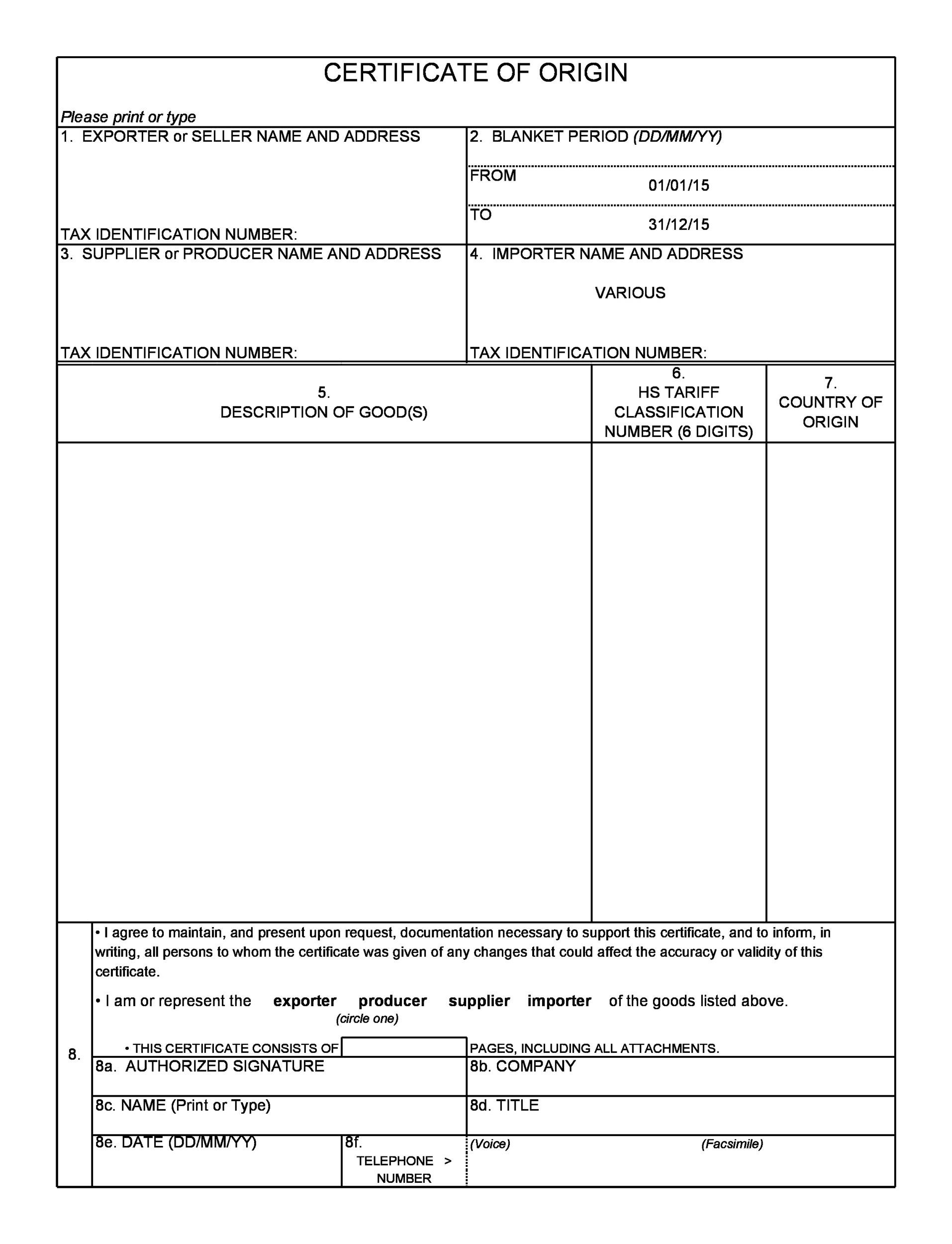
A standard one generally contains:
- Exporter details
- Importer details
- Certificate number
- Country of origin
- Product description
- HS Code
- Quantity
- Invoice reference
- Means of transport
- Destination country
- Official seal and signature
Additionally, all information should match the Commercial Invoice and Packing List to avoid customs discrepancies.
Types of Certificate of Origin
Depending on the trade agreement and destination country, exporters may require different types of Certificates of Origin.
Non-Preferential (COO)
This certificate confirms the country of origin but does not provide any special tariff benefits. It is commonly used for standard international trade.
Preferential (COO)
This certificate allows importers to claim reduced or zero customs duties under Free Trade Agreements (FTAs) between participating countries.
Understanding the correct certificate type helps businesses maximize trade benefits.
When Is a Certificate of Origin Required?
Importers may request a Certificate of Origin when:
- Customs regulations require proof of origin.
- Products qualify under a Free Trade Agreement.
- Buyers request it for compliance purposes.
- Banks require it during Letter of Credit transactions.
- Government authorities ask for origin verification.
Consequently, exporters should verify destination-country requirements before shipping goods.
Common Mistakes to Avoid
Incorrect documentation may delay customs clearance. Therefore, exporters should avoid:
- Incorrect country of origin
- Product description mismatches
- Wrong HS Codes
- Invoice number errors
- Missing signatures
- Incomplete exporter or importer details
Reviewing the certificate carefully before shipment helps prevent unnecessary delays.
Related Export Documents
A Certificate of Origin is generally submitted along with:
- Commercial Invoice
- Packing List
- Bill of Lading
- Phytosanitary Certificate
- Fumigation Certificate (if required)
- Shipping Bill
- Insurance Documents
Read more here about:
- Commercial Invoice in Export
- Packing List in Export
- Bill of Lading: Your Cargo’s Passport Explained
- Phytosanitary Certificate for Export
Together, these documents ensure smooth customs clearance and successful international trade. Exporters should also comply with documentation guidelines issued by the DGFT.
Why Choose Maati Farms?
At Maati Farms, we understand that successful exports depend on accurate documentation as much as premium-quality products. Our experienced export team prepares complete documentation to ensure smooth customs clearance and timely deliveries.
When you partner with us, you benefit from:
- Premium agricultural products
- Complete export documentation
- Reliable logistics support
- Customized packaging
- Private labeling solutions
- Dedicated customer assistance
Whether you’re importing spices, oil seeds, dehydrated vegetables, or superfoods, we help simplify your sourcing experience from India.
Conclusion
A Certificate of Origin is one of the most important documents in international trade. It verifies where products originate, supports customs clearance, and enables buyers to claim trade benefits where applicable.
Moreover, accurate documentation reduces delays and strengthens trust between exporters and importers. By choosing Maati Farms, you receive premium agricultural products supported by complete export documentation and reliable global shipping.
Frequently Asked Questions
Who issues a Certificate of Origin?
It is generally issued by an authorized Chamber of Commerce or another designated authority.
Is a Certificate of Origin mandatory?
Many countries require it for customs clearance, especially when products qualify under Free Trade Agreements.
What is the difference between Preferential and Non-Preferential Certificates?
A Preferential Certificate provides tariff benefits under trade agreements, while a Non-Preferential Certificate only confirms the product’s country of origin.