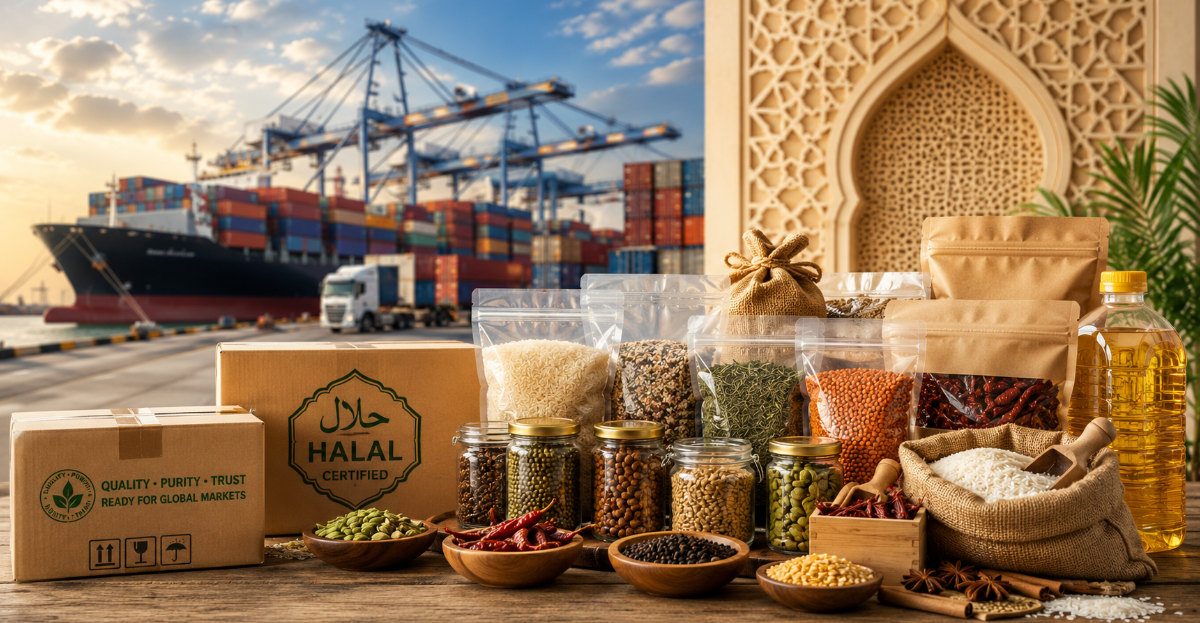
As global demand for Halal-certified food products continues to grow, obtaining Halal Certification for Food Export has become increasingly important for food exporters. Countries across the Middle East, Southeast Asia, and parts of Africa often require imported food products to comply with Halal standards before they can enter the market.
Whether you export spices, rice, pulses, dehydrated vegetables, edible oils, herbs, processed foods, or ready-to-eat products, Halal Certification can significantly improve your access to international buyers.
At Maati Farms, we understand the importance of meeting international quality and religious compliance standards. Our commitment to quality helps us serve customers across global markets with confidence.
What is Halal Certification?
Halal Certification is an official document issued by an accredited certification body confirming that food products comply with Islamic dietary laws.
The word “Halal” means permissible in Arabic. For food products, it indicates that the ingredients, manufacturing process, storage, packaging, and transportation comply with Islamic principles.
Halal Certification assures buyers that the product is suitable for consumption according to Islamic dietary requirements.
Why is Halal Certification Important?
Many countries require Halal-certified products before allowing food imports.

Having Halal Certification helps exporters:
- Access new international markets
- Increase buyer confidence
- Meet import regulations
- Improve brand credibility
- Expand export opportunities
- Gain a competitive advantage
As the global Halal food market continues to grow, certification has become a valuable asset for exporters.
Which Products Can Be Halal Certified?
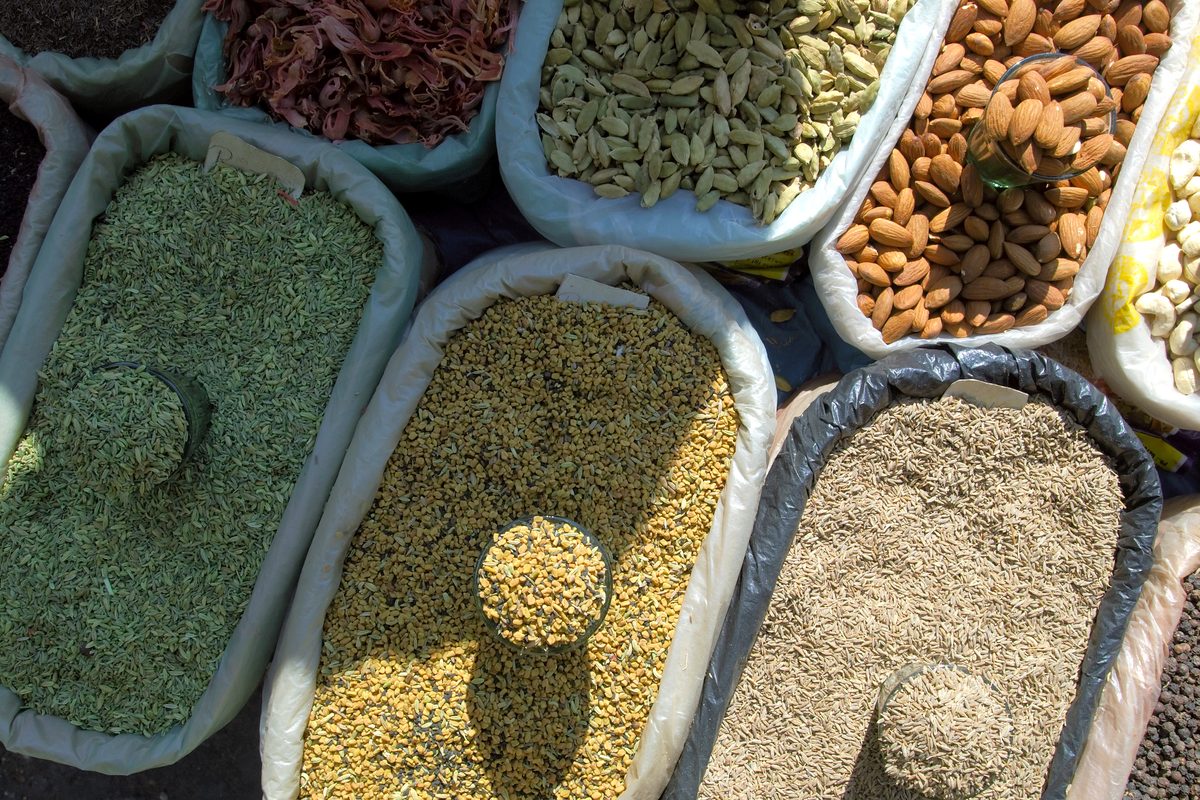
Many agricultural and processed food products can obtain Halal Certification, including:
- Spices
- Rice
- Wheat
- Pulses
- Oil Seeds
- Sesame Seeds
- Groundnuts
- Honey
- Herbs
- Tea
- Coffee
- Dehydrated Onion
- Dehydrated Garlic
- Makhana
- Millets
- Flour
- Ready-to-Eat Foods
- Frozen Foods
- Beverages
Many of the products exported by Maati Farms qualify for Halal Certification.
Countries That Prefer Halal-Certified Products
Halal Certification is especially valuable when exporting to:
- Saudi Arabia
- United Arab Emirates (UAE)
- Qatar
- Oman
- Kuwait
- Bahrain
- Malaysia
- Indonesia
- Brunei
- Singapore
- Egypt
- Morocco
- Jordan
- Turkey
Many importers in Europe and North America also prefer Halal-certified products to serve Muslim consumers.
Halal Certification Requirements for Agricultural Products Exported to the Middle East
Agricultural exporters shipping spices, rice, pulses, dehydrated vegetables, and other food-grade agro products to Gulf and Middle Eastern markets face a specific set of requirements beyond general Halal certification:
- GSO conformity: Many Gulf countries require conformity with GSO (Gulf Standardization Organization) food safety standards alongside Halal certification, particularly for processed or packaged agricultural goods.
- Accredited certification body: The Halal certificate must come from a body recognized by the importing country’s authority (e.g., ESMA in the UAE, SFDA in Saudi Arabia) – not every Halal certifier is accepted in every Gulf market.
- Ingredient traceability: For blended or processed agro products (spice mixes, flavoured rice, etc.), exporters must document that no ingredient, additive, or processing aid is derived from non-Halal sources.
- Packaging and labeling compliance: Labels must clearly state Halal status in Arabic/English as required by the destination country, alongside standard export labeling (origin, batch, expiry).
- Factory audit for agro-processing units: Facilities that process, pack, or blend agricultural products typically require a physical audit confirming no cross-contamination with non-Halal materials during handling.
These requirements apply on top of the general Halal certification process outlined above, and vary slightly by destination country within the Middle East – it’s worth confirming the specific importing country’s requirements before shipment.
Benefits of Halal Certification
Access to Global Markets
Halal Certification allows exporters to enter countries where Halal compliance is mandatory or highly preferred.
Builds Customer Trust
International buyers are more likely to work with certified suppliers.
Higher Export Opportunities
Certified products often receive better acceptance in international markets.
Better Brand Reputation
Halal Certification demonstrates transparency, quality, and compliance with recognized standards.
Competitive Advantage
Businesses with Halal Certification often stand out from competitors without certification.
Who Should Obtain Halal Certification?
Halal Certification is recommended for:
- Food Manufacturers
- Agricultural Exporters
- Spice Exporters
- Rice Exporters
- Oil Seed Exporters
- Food Processing Companies
- Private Label Manufacturers
- Packaged Food Companies
- Ready-to-Eat Food Manufacturers
- Organic Food Exporters
Even if buyers do not initially request it, certification can increase your product’s marketability.
Documents Required for Halal Certification
Although requirements vary by certification body, exporters generally need:
- Business Registration Certificate
- FSSAI License
- Import Export Code (IEC)
- GST Registration (if applicable)
- Product List
- Ingredient Details
- Manufacturing Process Flow
- Factory Layout
- Packaging Details
- Raw Material Supplier Information
- Quality Control Documents
Maintaining accurate records helps streamline the certification process.
Halal Certification Process

Step 1: Choose an Accredited Certification Body
Select a recognized Halal certification agency authorized to issue certificates accepted by your target export markets.
Step 2: Submit the Application
Complete the application with business and product details.
Step 3: Document Review
The certification body reviews your manufacturing process, ingredients, and documentation.
Step 4: Factory Audit
Auditors inspect the production facility to verify compliance with Halal standards.
Step 5: Correct Non-Conformities
If any issues are identified during the audit, corrective actions must be completed before certification.
Step 6: Certificate Issuance
Once all requirements are met, the Halal Certificate is issued.
Common Mistakes to Avoid
Exporters should avoid these common mistakes:
- Using non-approved ingredients
- Poor traceability of raw materials
- Inadequate documentation
- Improper product labeling
- Cross-contamination during production
- Delayed certificate renewal
Maintaining proper hygiene, documentation, and quality systems can help ensure ongoing compliance.
Halal Certification vs HACCP
Although both certifications relate to food products, they serve different purposes.
| Halal Certification | HACCP Certification |
|---|---|
| Focuses on Islamic dietary compliance | Focuses on food safety management |
| Verifies permissible ingredients | Identifies and controls food safety hazards |
| Required by many Muslim-majority markets | Recognized globally for food safety |
| Religious compliance | Scientific food safety system |
Many exporters obtain both certifications to satisfy international buyers.
Related Export Documents and Certifications
Food exporters may also require:
- APEDA Registration
- FSSAI License
- HACCP Certification
- Phytosanitary Certificate
- Certificate of Origin
- Commercial Invoice
- Packing List
- Shipping Bill
- Bill of Lading
Read more here about:
- HACCP Certification for Food Export
- FSSAI License for Food Export
- APEDA Registration: Complete Guide
- Phytosanitary Certificate
- Fumigation Certificate
- Certificate of Origin
- Commercial Invoice
These resources help exporters understand the complete export compliance process.
Why Choose Maati Farms?
At Maati Farms, we are committed to delivering premium-quality agricultural and processed food products that meet international standards. We prioritize quality assurance, food safety, and regulatory compliance to ensure smooth global trade.
Our strengths include:
- Premium agricultural products
- Strict quality inspections
- Reliable export documentation
- International logistics support
- Customized packaging solutions
- Long-term partnerships with global buyers
Whether you require spices, cereals, oil seeds, dehydrated vegetables, herbs, or superfoods, Maati Farms is dedicated to supplying products that meet international buyer expectations.
Conclusion
Halal Certification for Food Export is becoming increasingly important for food exporters serving global markets. It enhances buyer confidence, improves access to Muslim-majority countries, and strengthens a company’s reputation for quality and compliance.
When combined with certifications such as FSSAI, HACCP, and APEDA Registration, Halal Certification positions exporters for long-term success in international trade. Businesses planning to expand into new markets should consider obtaining Halal Certification as part of their overall export strategy.
Frequently Asked Questions
Is Halal Certification mandatory for food exports?
It depends on the destination country and buyer requirements. Many Muslim-majority countries require Halal Certification for specific food products.
Who issues Halal Certification in India?
Halal Certification for Food Export is issued by accredited Halal certification bodies recognized by importing countries.
Can agricultural products receive Halal Certification?
Yes. Products such as spices, rice, pulses, oil seeds, herbs, honey, and processed foods can obtain Halal Certification if they comply with the required standards.
How long is Halal Certification valid?
The validity period varies depending on the certification body. Exporters should renew the certificate before it expires.
Exporting specifically to the Gulf? See our detailed Halal certification guide for Middle East agricultural exports, covering SFDA, ESMA, and GSO requirements by country.