Exporting food products from India requires compliance with several regulatory standards to ensure food safety and quality. One of the most important certifications for food businesses is the FSSAI License. Issued by the Food Safety and Standards Authority of India (FSSAI), this license demonstrates that a business follows the food safety regulations established under Indian law.
Whether you export spices, cereals, pulses, oil seeds, dehydrated vegetables, honey, or processed food products, obtaining the appropriate FSSAI License strengthens your credibility and supports smooth international trade. At Maati Farms, we understand the importance of regulatory compliance and maintain high standards to deliver safe and quality agricultural products worldwide.
What Is an FSSAI License?
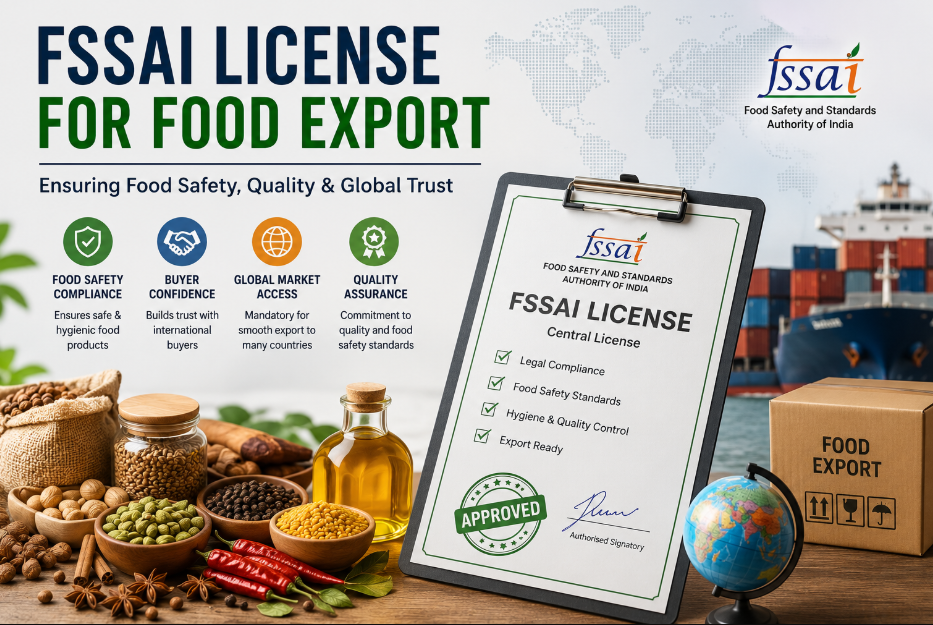
An FSSAI License is a legal authorization issued by the Food Safety and Standards Authority of India to businesses involved in manufacturing, processing, packaging, storing, distributing, transporting, importing, or exporting food products.
The license ensures that food businesses comply with food safety regulations and maintain hygienic practices throughout the supply chain.
Is an FSSAI License Mandatory for Food Export?
Yes. Food exporters in India generally require an FSSAI Central License because export activities fall under the jurisdiction of the Central Licensing Authority.
In addition, many international buyers request proof that suppliers comply with recognized food safety regulations before placing orders.
Types of FSSAI Licenses
FSSAI issues three types of licenses based on the scale of operations.
Basic Registration
Suitable for small food businesses with limited turnover.
State License
Applicable to medium-sized food businesses operating within a state.
Central License
Required for food exporters, importers, large manufacturers, and businesses involved in international trade.
For export businesses, the Central License is generally mandatory.
Benefits of an FSSAI License
Legal Compliance
The license ensures compliance with the Food Safety and Standards Act, 2006.
Increased Buyer Confidence
International buyers prefer suppliers who operate under recognized food safety regulations.
Better Export Opportunities
Many overseas importers consider FSSAI licensing an essential requirement before entering into business relationships.
Improved Brand Reputation
The license reflects a company’s commitment to food safety and quality.
Easier Regulatory Approvals
Maintaining proper licensing simplifies inspections and export documentation.
Who Should Obtain an FSSAI License?
An FSSAI License is recommended for businesses involved in:
- Agricultural product exports
- Spice exports
- Oil seed exports
- Processed food manufacturing
- Food packaging
- Warehousing
- Food transportation
- Food processing units
- Import and export businesses
Documents Required for an FSSAI License
Applicants generally need the following documents:
- PAN Card
- Aadhaar Card or Identity Proof
- Business Registration Certificate
- Import Export Code (IEC)
- GST Registration (if applicable)
- Address Proof of the Business
- List of Food Products
- Passport-size Photograph
- Water Testing Report (for manufacturers)
- Proof of Possession of Business Premises
Providing complete and accurate documents helps avoid delays during the application process.
How to Apply for an FSSAI License
Step 1: Determine the Appropriate License
Identify whether your business requires a Basic Registration, State License, or Central License.
Step 2: Register on the FoSCoS Portal
Create an account on the official Food Safety Compliance System (FoSCoS).
Step 3: Complete the Application Form
Fill in the required business and product details carefully.
Step 4: Upload Documents
Submit all supporting documents in the prescribed format.
Step 5: Pay the Applicable Fee
Complete the online payment based on your license category.
Step 6: Inspection (If Required)
In certain cases, FSSAI officials may inspect the premises before approval.
Step 7: Receive the License
Once approved, the FSSAI License can be downloaded from the FoSCoS portal.
Common Mistakes to Avoid
Many businesses experience delays because of avoidable errors.
Some common mistakes include:
- Choosing the wrong license category
- Uploading incomplete documents
- Providing incorrect business information
- Delaying document verification
- Failing to renew the license on time
Therefore, reviewing the application before submission can help avoid unnecessary delays.
FSSAI License vs APEDA Registration
Although both are important for exporters, they serve different purposes.
| FSSAI License | APEDA Registration |
|---|---|
| Focuses on food safety compliance | Promotes agricultural exports |
| Issued by FSSAI | Issued by APEDA |
| Mandatory for food businesses | Mandatory for scheduled APEDA products |
| Regulates food safety | Supports export promotion |
Many exporters require both certifications depending on the products they export.
Related Export Documents and Certifications
Food exporters may also require:
- APEDA Registration
- HACCP Certification
- Phytosanitary Certificate
- Certificate of Origin
- Commercial Invoice
- Packing List
- Shipping Bill
- Bill of Lading
- Fumigation Certificate
Read more here about:
- HACCP Certification for Food Export
- APEDA Registration: Complete Guide
- Phytosanitary Certificate
- Fumigation Certificate
- Certificate of Origin
- Commercial Invoice
- Shipping Bill
- Bill of Lading
These resources help exporters understand the complete export compliance process.
Why Choose Maati Farms?
At Maati Farms, we prioritize food safety, quality, and regulatory compliance throughout our export operations. We work closely with trusted suppliers and follow industry best practices to ensure that our agricultural and processed food products meet international standards.
Our strengths include:
- Premium-quality agricultural products
- Strict quality control
- Export documentation support
- Reliable global logistics
- Customized packaging solutions
- Commitment to international food safety standards
Whether you require spices, cereals, oil seeds, dehydrated vegetables, or superfoods, Maati Farms is committed to delivering products that meet buyer expectations worldwide.
Conclusion
An FSSAI License is an essential requirement for businesses exporting food products from India. It demonstrates compliance with food safety regulations, strengthens buyer confidence, and supports smooth international trade.
By obtaining the appropriate FSSAI License and maintaining proper food safety practices, exporters can expand into global markets with greater credibility. Combined with certifications such as APEDA Registration and HACCP, FSSAI licensing helps businesses establish long-term success in the international food industry.
Frequently Asked Questions
Is an FSSAI License mandatory for food exporters?
Yes. Food exporters generally require an FSSAI Central License to legally export food products from India.
Which FSSAI License is required for export?
The Central FSSAI License is generally required for export businesses.
Can I apply for an FSSAI License online?
Yes. Applications can be submitted through the official FoSCoS portal.
How long is an FSSAI License valid?
The license can be issued for 1 to 5 years, depending on the validity period selected during the application. It must be renewed before expiry.