If you’re planning to launch a food brand or source products from manufacturers, you’ve likely come across the terms OEM (Original Equipment Manufacturer) and Private Label. While both involve manufacturing products for another business, they serve different purposes and offer unique advantages. Choosing the right manufacturing model can significantly impact your brand identity, production costs, customization options, and time to market.
In this guide, we’ll explain the about OEM vs Private Label manufacturing, their benefits, challenges, and how to decide which option is best for your business.
What is OEM Manufacturing?
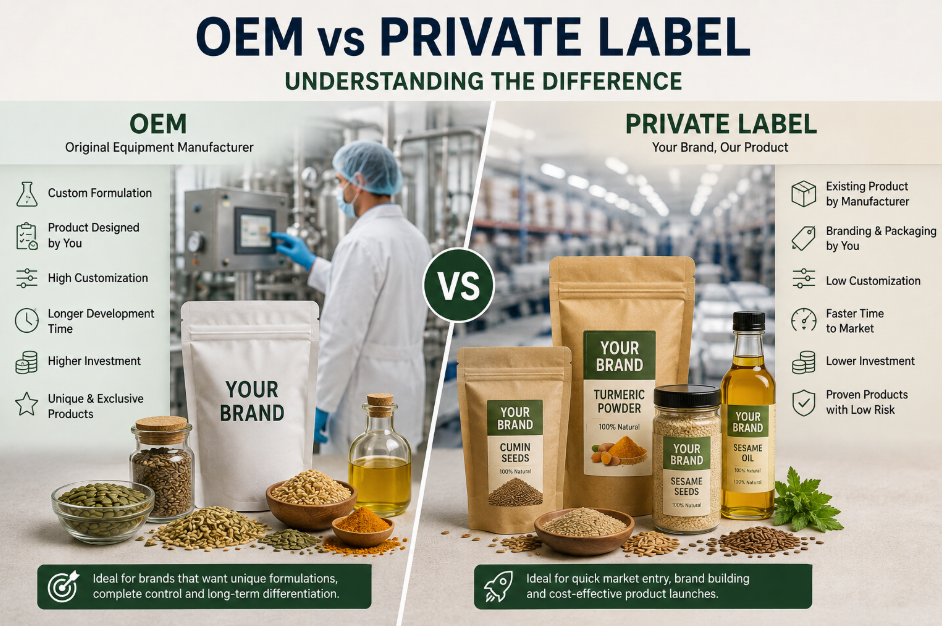
OEM (Original Equipment Manufacturer) refers to a manufacturer that produces products according to the buyer’s unique specifications and requirements. In an OEM arrangement, the buyer usually owns the product design, formulation, or technical specifications, while the manufacturer produces the product.
For example, a food company may develop its own spice blend recipe and hire a manufacturer to produce and package it under their brand.
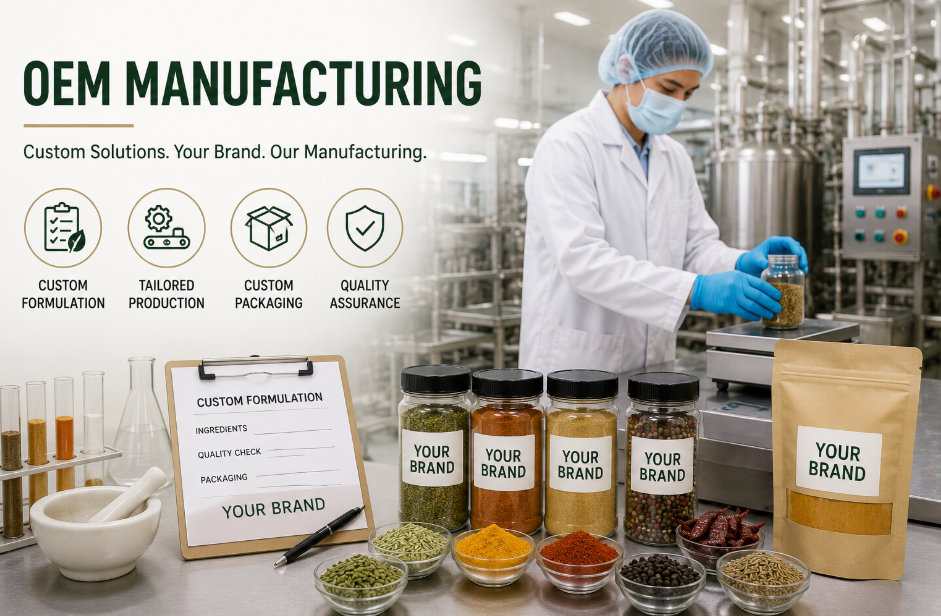
OEM manufacturing is ideal for businesses that want complete control over product quality, ingredients, and branding. Learn more about international manufacturing standards from the International Organization for Standardization (ISO).
What is Private Label Manufacturing?
Private Label manufacturing involves purchasing products that are already developed by a manufacturer and selling them under your own brand name. The manufacturer handles product development and production, while the buyer focuses on branding, packaging, and marketing.
For instance, a manufacturer may already produce turmeric powder, cumin powder, or sesame oil. A buyer can simply add their own logo and packaging before selling the product.
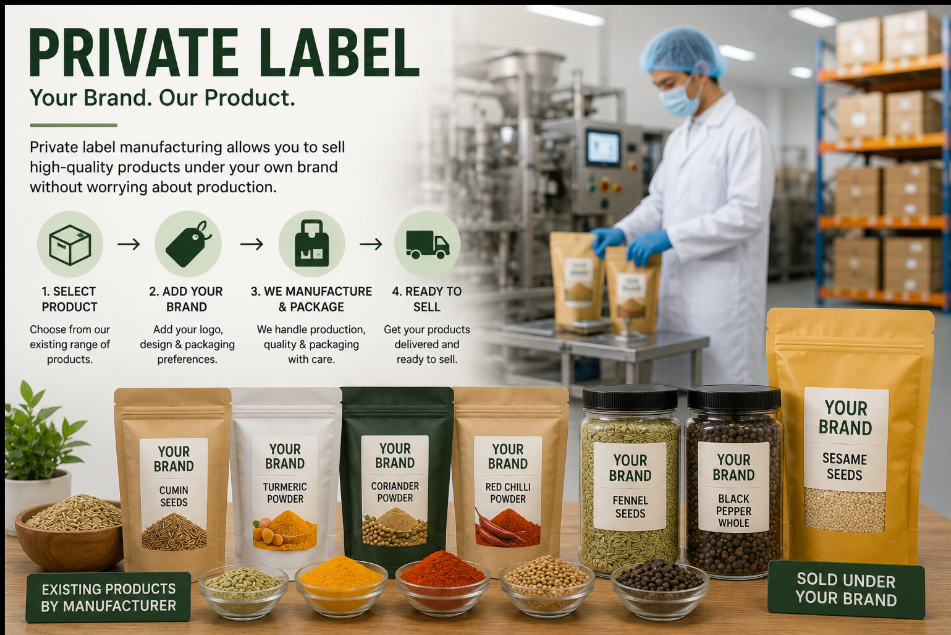
Private Label is a popular choice for startups and businesses looking to launch products quickly without investing in product development. Businesses planning to export private label food products should also understand international trade rules published by the International Chamber of Commerce (ICC).
OEM vs Private Label: Key Differences
| Feature | OEM | Private Label |
|---|---|---|
| Product Design | Buyer develops the product | Manufacturer already has the product |
| Customization | High | Limited |
| Development Time | Longer | Faster |
| Initial Investment | Higher | Lower |
| Branding | Fully customized | Brand customization only |
| Product Ownership | Buyer | Manufacturer |
| Ideal For | Established brands | Startups and retailers |
Benefits of OEM Manufacturing
OEM manufacturing offers businesses greater flexibility and control.
Complete Product Customization: Businesses can choose ingredients, formulations, packaging, and product specifications according to their requirements.
Strong Brand Differentiation: Since the product is uniquely designed, it becomes easier to stand out in competitive markets.
Better Intellectual Property Control: Product formulations and designs remain exclusive to the buyer, helping build long-term brand value.
Higher Market Positioning: Customized products often command premium pricing because they offer something unique to customers.
Benefits of Private Label Manufacturing
Private Label manufacturing is a faster and more affordable option for many businesses.
Faster Market Entry: Since the products are already developed, businesses can launch their brand much more quickly.
Lower Investment: There’s no need to spend significant time and money on research, product development, or testing.
Reduced Risk: Manufacturers already have experience producing these products, reducing the likelihood of production issues.
Easy Brand Expansion: Businesses can quickly add new products to their portfolio without developing each product from scratch.
OEM vs Private Label: Which Option is Better for Food Businesses?
The right choice depends on your business goals.
Choose OEM if you:
- Want unique product formulations
- Need complete control over quality
- Plan to build a premium brand
- Have sufficient development budget
- Require exclusive products
Choose Private Label if you:
- Want to launch quickly
- Have limited investment
- Need proven products
- Want to test new markets
- Prefer lower business risks
Many successful food brands actually begin with Private Label products and later transition to OEM manufacturing as their business grows. Indian food exporters can also explore export policies and market opportunities through the Directorate General of Foreign Trade (DGFT).
How Maati Farms Supports Global Buyers
At Maati Farms, we understand that every business has different sourcing requirements.
Whether you’re looking for OEM manufacturing with customized formulations or Private Label food products ready for your brand, our experienced team can help you find the right solution.
We work with trusted manufacturing partners to supply high-quality Indian agricultural products including spices, sesame seeds, rice, pulses, herbs, dehydrated vegetables, and edible oils that meet international quality standards.
Frequently Asked Questions
Is OEM better than Private Label?
Not necessarily. OEM offers greater customization, while Private Label provides a faster and more cost-effective route to market. The best option depends on your business goals and budget.
Can startups choose OEM manufacturing?
Yes, but OEM generally requires a higher investment. Many startups begin with Private Label manufacturing before moving to OEM as their brand grows.
Is Private Label profitable?
Yes. Private Label products allow businesses to build their own brand without investing heavily in product development, making them a profitable option for many companies.
Can I export Private Label food products?
Yes. As long as the products comply with the destination country’s food safety and import regulations, Private Label products can be exported internationally.
Conclusion
Both OEM and Private Label manufacturing offer valuable opportunities for businesses entering the food industry. OEM provides complete customization and product ownership, making it ideal for established brands seeking unique products. Private Label, on the other hand, offers a quicker and more affordable way to launch a branded product with lower investment.
Before making a decision, consider your budget, target market, branding strategy, and long-term business goals. Choosing the right manufacturing model can help you build a stronger brand and achieve sustainable growth in domestic and international markets.
Whether you’re sourcing premium Indian spices, rice, sesame seeds, pulses, herbs, or other agricultural products, partnering with a reliable manufacturer is the first step toward building a successful food business.