Finding the right food export supplier is one of the most important decisions for any importer, distributor, wholesaler, or retailer. The quality of your supplier directly affects your product quality, delivery timelines, customer satisfaction, and overall business reputation.
With thousands of suppliers available worldwide, choosing the right partner can feel overwhelming. A supplier may offer competitive prices, but do they consistently meet quality standards? Can they handle large export orders? Do they have the certifications required by your country?
In this guide, we’ll walk you through the essential factors to consider when selecting a food export supplier, helping you make informed decisions and build long-term business relationships.
Why Choosing the Right Food Export Supplier Matters
A reliable food export supplier is more than just a vendor—they become a long-term business partner. Choosing the right supplier ensures consistent product quality, timely deliveries, compliance with international regulations, and stronger customer satisfaction. A dependable supplier helps you:
- Maintain consistent product quality
- Meet delivery schedules
- Reduce supply chain risks
- Comply with import regulations
- Build trust with customers
- Grow your business with confidence
On the other hand, working with an unreliable supplier can lead to shipment delays, poor-quality products, customs issues, and financial losses. Investing time in selecting the right partner can save your business significant costs in the long run.
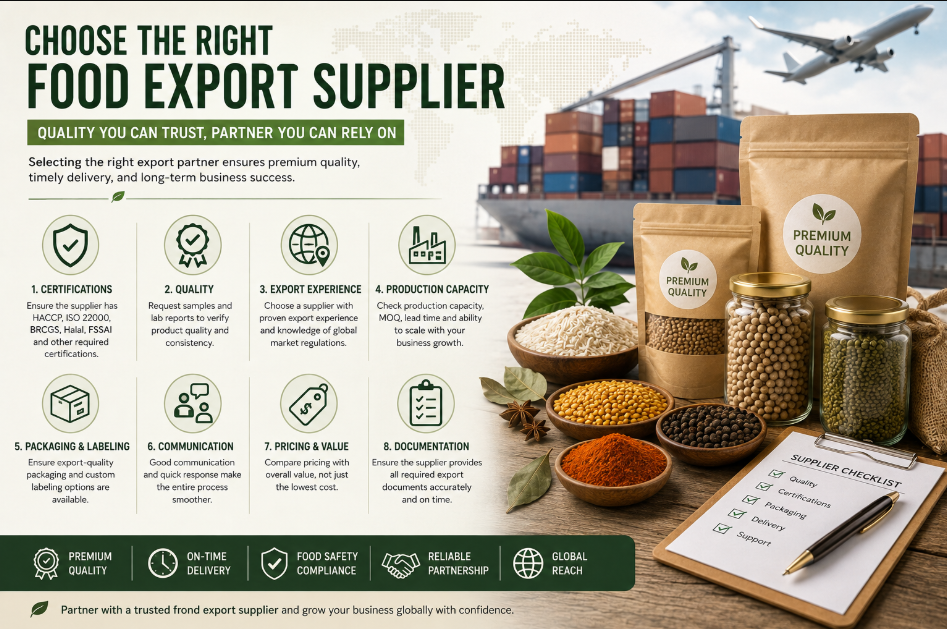
1. Verify Food Safety Certifications
One of the first things to check is whether the supplier follows internationally recognized food safety standards. Reliable exporters often hold certifications such as:
- HACCP : Read more here about HACCP
- ISO 22000 : Read more here about ISO 22000
- BRCGS : Read more here about BRCGS
- Halal Certification (where applicable) : Read more here about Halal Certification
- FSSAI License : Read more here about FSSAI License
These certifications demonstrate that the supplier follows strict hygiene practices, quality management systems, and internationally accepted food safety standards. Buyers can also verify internationally recognized food safety standards through the International Organization for Standardization (ISO). Before placing a large order, ask for copies of these certifications and verify that they are valid and up to date.
2. Evaluate Product Quality
Quality should always be your top priority. Request the following from the supplier before making a purchasing decision:
- Product specifications
- Product catalog
- Product images
- Samples
- Certificate of Analysis (COA)
- Laboratory test reports
Receiving product samples allows you to inspect quality, color, aroma, texture, packaging, and consistency before committing to bulk purchases.
3. Check Export Experience
Not every manufacturer has experience in exporting products internationally. An experienced food export supplier understands the requirements of global markets and can handle international shipments efficiently. Ask questions such as:
- Which countries do you currently export to?
- How many years have you been exporting?
- Can you provide export references?
- What export documents do you provide?
Suppliers with international experience are usually more familiar with customs procedures, shipping regulations, and buyer expectations. Indian exporters can stay updated on export policies and trade regulations through the Directorate General of Foreign Trade (DGFT).
4. Understand Production Capacity
Before signing a long-term agreement, ensure the supplier can meet your current and future demand. Discuss:
- Monthly production capacity
- Minimum Order Quantity (MOQ)
- Lead time
- Seasonal availability
- Ability to scale production
A supplier with sufficient production capacity can support your business growth without affecting delivery schedules.
5. Review Packaging and Labeling Options
Proper packaging protects products during international transportation and helps create a strong brand image. A professional supplier should offer:
- Food-grade packaging
- Export-quality cartons
- Moisture-resistant packaging
- Customized labeling
- Private Label services
- OEM manufacturing options
If you’re building your own brand, ask whether customized packaging and branding services are available.
6. Evaluate Communication and Customer Support
Strong communication is essential in international business. A reliable supplier should:
- Respond promptly to emails and inquiries
- Provide accurate quotations
- Share production updates
- Inform you about shipment schedules
- Resolve issues quickly
Transparent communication builds trust and helps avoid misunderstandings throughout the export process.
7. Compare Pricing, Not Just Costs
While pricing is important, choosing the cheapest supplier isn’t always the smartest decision. Instead, compare the overall value offered. Consider factors such as:
- Product quality
- Food safety certifications
- Export experience
- Packaging quality
- Delivery reliability
- Customer support
Paying slightly more for a reliable supplier often reduces long-term business risks.
Red Flags to Watch Out For
Before selecting a supplier, be cautious of these warning signs:
- Unwillingness to share certifications
- Poor communication
- Inconsistent product quality
- Unrealistically low prices
- No export experience
- Lack of proper documentation
- Delayed responses
- Negative customer reviews
If you notice multiple red flags, it’s better to continue your search rather than risk future problems.
Questions to Ask Before Choosing a Food Export Supplier
Before finalizing your supplier, ask these important questions:
- Which countries do you currently export to?
- What certifications do you hold?
- Can you provide product samples?
- What is your Minimum Order Quantity (MOQ)?
- What are your payment terms?
- How long is your production lead time?
- Do you offer Private Label or OEM services?
- Which export documents do you provide?
These questions help you evaluate the supplier’s reliability and professionalism.
Why Choose Maati Farms?
At Maati Farms, we are committed to delivering premium-quality Indian agricultural products to buyers across the globe. We work closely with trusted manufacturers and farmers to ensure every product meets international food safety and quality standards.
Whether you’re a wholesaler, distributor, retailer, or food brand, our team is dedicated to helping you source high-quality products with confidence.
Frequently Asked Questions
What should I look for in a food export supplier?
Look for certifications, product quality, export experience, production capacity, reliable communication, and positive customer reviews.
Why are food safety certifications important?
Certifications such as HACCP, ISO 22000, and BRCGS demonstrate that the supplier follows internationally recognized food safety standards.
Can I request product samples before placing an order?
Yes. Reputable suppliers usually provide samples so buyers can evaluate product quality before placing bulk orders.
Do food export suppliers offer Private Label services?
Many exporters provide Private Label and OEM manufacturing services, allowing businesses to sell products under their own brand.
Conclusion

Choosing the right food export supplier is one of the most important decisions for any business involved in international trade. A reliable supplier does much more than deliver products—they help ensure consistent quality, timely shipments, regulatory compliance, and long-term business success.
Before making your decision, take the time to verify certifications, evaluate product quality, review export experience, and assess production capabilities. Building a partnership with a trustworthy supplier can reduce risks, strengthen your supply chain, and create lasting value for your business.
If you’re looking for a dependable partner for premium Indian agricultural exports, Maati Farms is committed to delivering quality products, transparent communication, and reliable export solutions tailored to your business needs.