
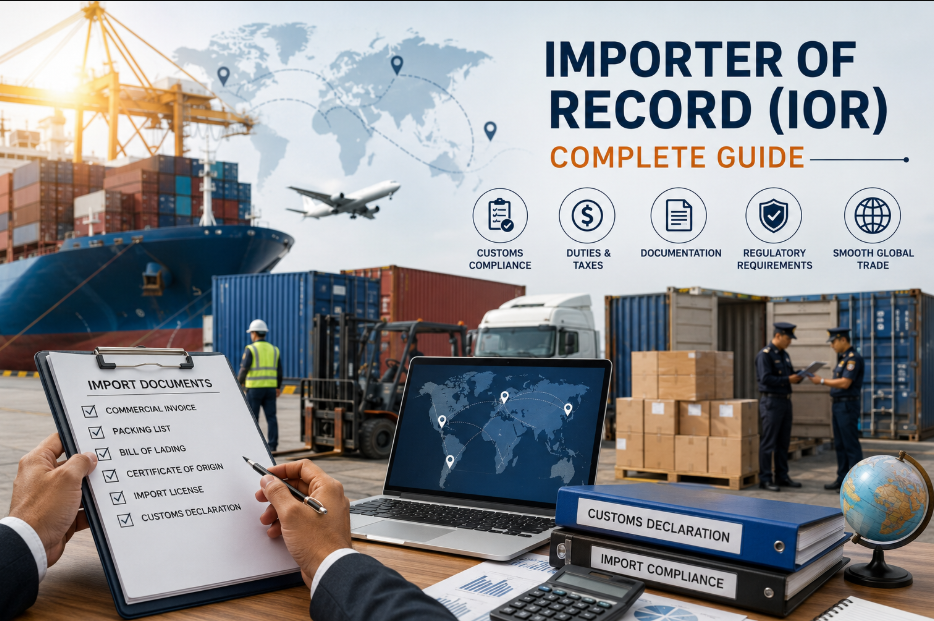
International trade involves much more than transporting goods from one country to another. Every shipment must comply with customs regulations, import laws, taxes, and documentation requirements before it can legally enter the destination country. This is where an Importer of Record (IOR) becomes essential.
Whether you’re importing food products, machinery, medical devices, electronics, or industrial equipment, the Importer of Record is responsible for ensuring the shipment complies with local laws and clears customs without unnecessary delays.
In this guide, we’ll explain what an Importer of Record is, its key responsibilities, required documents, benefits, and why it’s an important part of successful global trade.
What is an Importer of Record (IOR)?
An Importer of Record (IOR) is the individual or company legally responsible for importing goods into a country. The IOR ensures that imported products comply with the destination country’s customs regulations, safety standards, and import requirements.
They are responsible for submitting customs declarations, paying import duties and taxes, maintaining proper documentation, and ensuring all regulatory requirements are met. In simple terms, the Importer of Record acts as the legal representative for imported goods. The role and responsibilities of an Importer of Record are guided by international customs practices established by the World Customs Organization (WCO).
Why is an Importer of Record Important?
Every country has its own import regulations. If shipments fail to meet these requirements, customs authorities may delay, inspect, or even reject the goods. Having the correct Importer of Record helps businesses:
- Ensure smooth customs clearance
- Comply with local import regulations
- Avoid shipment delays
- Reduce legal and financial risks
- Improve supply chain efficiency
- Build trust with international partners
For businesses expanding into new markets, an experienced IOR simplifies the import process and helps prevent costly mistakes.
Responsibilities of an Importer of Record
The role of an Importer of Record extends far beyond submitting paperwork. Some of the primary responsibilities include:
Customs Compliance
The IOR ensures imported goods meet the customs regulations of the destination country.
Payment of Duties and Taxes
They are responsible for paying applicable customs duties, import taxes, VAT or GST, and other government charges.
Documentation
The IOR prepares and maintains all import-related documents required for customs clearance.
Regulatory Compliance
Certain products require additional approvals before import.
Examples include:
- Food products
- Medical devices
- Chemicals
- Electronics
- Pharmaceuticals
The IOR ensures these requirements are fulfilled.
Record Keeping
Import records must often be maintained for several years in case of customs audits or inspections.
Documents Required by an Importer of Record
Although documentation requirements vary by country, most imports require:
- Commercial Invoice
- Packing List
- Bill of Lading or Air Waybill
- Certificate of Origin
- Import License (if applicable)
- Customs Declaration
- Insurance Certificate
- Product Compliance Certificates
- Purchase Order
- Inspection Reports (where required)
Accurate documentation helps avoid delays and ensures faster customs clearance.
Read more here about:
- HACCP Certification for Food Export
- BRCGS Certification for Food Export: Complete Guide
- ISO 22000 Certification for Food Export: Complete Guide
- Halal Certification for Food Export: Complete Guide
- FSSAI License for Food Export
- APEDA Registration: Complete Guide
- Phytosanitary Certificate
- Fumigation Certificate
- Certificate of Origin
- Commercial Invoice
These resources help exporters understand the complete export compliance process
Benefits of Using an Importer of Record
Working with an experienced Importer of Record offers several advantages.
Faster Customs Clearance
Proper documentation and regulatory compliance help shipments move through customs more efficiently.
Reduced Compliance Risks
An experienced IOR understands local import regulations and helps businesses avoid penalties.
Easy Market Expansion
Companies can enter international markets even without establishing a local legal entity.
Better Supply Chain Management
A reliable import process improves delivery timelines and customer satisfaction.
Saves Time and Resources
Businesses can focus on sales and operations while import compliance is managed professionally.
Common Challenges During Import
Importers often face challenges such as:
- Incorrect HS Codes
- Missing documentation
- Delayed duty payments
- Regulatory approvals
- Customs inspections
- Product compliance issues
Most of these challenges can be minimized through proper planning and experienced customs support.
Best Practices for Smooth Imports
To simplify international imports:
- Verify product HS Codes before shipping.
- Maintain complete documentation.
- Understand destination country regulations.
- Keep import records organized.
- Work with experienced customs professionals.
- Review shipping documents before dispatch.
These practices reduce delays and improve compliance.
Frequently Asked Questions
Is the Importer of Record the same as the Consignee?
No. The consignee is the person or company receiving the shipment, while the Importer of Record is legally responsible for customs compliance and import documentation.
Can a customs broker act as the Importer of Record?
In some countries, authorized customs brokers or specialized IOR service providers can act as the Importer of Record, depending on local regulations.
Is an Importer of Record required for every international shipment?
Most commercial imports require an Importer of Record because customs authorities need a legally responsible party to ensure compliance.
What happens if there is no Importer of Record?
Without an Importer of Record, shipments may be delayed, held by customs, returned to the sender, or subject to fines and penalties.
Conclusion
An Importer of Record (IOR) plays a vital role in international trade by ensuring imported goods comply with customs laws, regulatory requirements, and documentation standards.
Whether you’re importing food products, industrial equipment, electronics, or consumer goods, having the right Importer of Record helps streamline customs clearance, reduce compliance risks, and support efficient global trade.
Understanding the responsibilities of an IOR is an important step toward building a reliable and successful international supply chain.