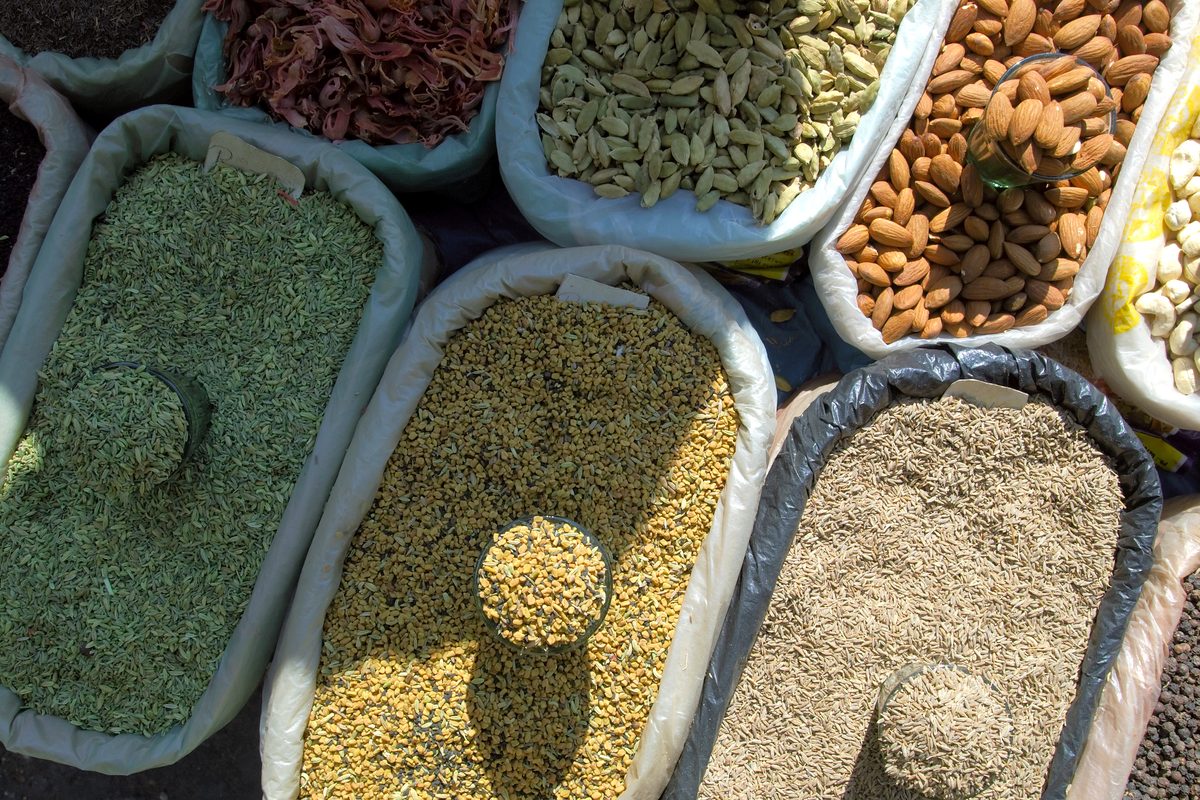

If you’re sourcing food products internationally, one of the first terms you’ll encounter is MOQ in food export, or Minimum Order Quantity. Whether you’re buying spices, rice, pulses, sesame seeds, herbs, dehydrated vegetables, or other agricultural products, suppliers often specify a minimum quantity that buyers need to order.
For new importers and growing food brands, understanding MOQ is important because it directly affects purchasing costs, inventory, shipping, and overall profitability.
In this guide, we’ll explain what MOQ means, why suppliers set minimum order quantities, what factors affect MOQ, and how buyers can negotiate better terms with food export suppliers.
What is MOQ in Food Export?
MOQ (Minimum Order Quantity) is the smallest quantity of a product that a supplier is willing to accept for a single order. For example, if a supplier sets an MOQ of 500 kg for turmeric powder, the buyer would generally need to purchase at least 500 kg in that order. MOQ can be expressed in different ways depending on the product and supplier:
- Kilograms (KG)
- Metric tons (MT)
- Number of cartons
- Number of bags
- Number of pallets
- Number of containers
The MOQ may also differ between bulk products and customized products.
Why Do Food Export Suppliers Set an MOQ?
MOQ helps suppliers manage their production and operating costs.
Production Efficiency
Manufacturing food products involves raw materials, labor, machinery, packaging, quality testing, and other expenses. Producing very small quantities may not be economically efficient for the supplier.
Packaging Costs
Customized packaging can require printing, labels, packaging materials, and setup costs. A higher MOQ helps distribute these expenses across a larger order.
Raw Material Procurement
Exporters may need to purchase raw materials in bulk from farmers, processors, or other suppliers. Minimum order quantities help them manage procurement more efficiently.
Logistics
International shipping involves transportation, documentation, customs procedures, and handling charges. Larger shipments can make these costs more practical for both the supplier and buyer.
What Factors Affect MOQ?
MOQ isn’t always the same for every product. Several factors can influence the minimum order quantity.
Product Type
Bulk commodities may have different MOQs compared with processed or packaged food products. For example, the MOQ for bulk rice may be different from the MOQ for customized spice packaging.
Custom Packaging
Standard packaging usually allows for smaller orders than fully customized packaging. If you’re requesting your own branding, artwork, labels, or packaging format, the supplier may require a higher MOQ.
Product Customization
OEM and Private Label products often have higher MOQs because the supplier may need to create customized formulations, packaging, or production batches.
You can learn more about these models in our guide to OEM vs Private Label.
Order Destination
Shipping requirements and destination-country regulations can also influence the practical order size.
Seasonal Availability
Agricultural products may have seasonal production cycles. Availability and pricing can therefore affect minimum order quantities.
MOQ vs EOQ: What’s the Difference?
EOQ and MOQ are sometimes confused.
MOQ (Minimum Order Quantity) is the minimum amount a supplier is willing to sell.
EOQ (Economic Order Quantity) is the quantity a buyer determines is economically efficient to order based on factors such as purchasing costs, inventory costs, and demand.
In simple terms:
MOQ = Supplier’s minimum requirement and EOQ = Buyer’s economically efficient order size
Understanding both can help businesses make better purchasing decisions.
How MOQ Affects Food Importers
MOQ can have a significant impact on your business.
Inventory Investment
A larger MOQ means more money is tied up in inventory. Buyers should ensure they have sufficient demand before placing large orders.
Storage Requirements
Food products need appropriate storage conditions. Before ordering large quantities, consider warehouse capacity, shelf life, temperature, humidity, and handling requirements.
Cash Flow
Large orders require greater upfront investment. Businesses should evaluate payment terms and expected sales before committing to a high MOQ.
Shipping Costs
Ordering larger quantities can sometimes reduce the transportation cost per unit, particularly when shipments are consolidated efficiently.
How Can Buyers Negotiate MOQ?
MOQ isn’t always completely fixed. Depending on the supplier and product, buyers may be able to negotiate.
Start With a Trial Order
If you’re a new buyer, explain that you’re testing the market and request a smaller initial order. A successful trial order can help establish trust for future bulk purchases.
Combine Multiple Products
Some suppliers may allow buyers to combine different products within one shipment, particularly when they are sourcing several related products.
Choose Standard Packaging
If you don’t require customized packaging, ask whether the supplier can offer a lower MOQ using standard export packaging.
Build a Long-Term Relationship
Suppliers may be more flexible with buyers who demonstrate consistent purchasing potential. Instead of negotiating only on price, discuss your expected order volume over the long term.
MOQ for Private Label and OEM Food Products
MOQ becomes especially important when launching a branded food product. Private Label and OEM orders may require higher quantities because suppliers have to manage:
- Custom packaging
- Labels and artwork
- Product formulation
- Printing requirements
- Production setup
- Quality testing
If you’re launching a new product, discuss MOQ with the supplier before finalizing your packaging or formulation.
Questions to Ask Your Food Export Supplier
Before placing an order, ask:
- What is the MOQ for this product?
- Is the MOQ different for customized packaging?
- Can I place a smaller trial order?
- Can different products be combined?
- What is the production lead time?
- What are the payment terms?
- What is the shelf life?
- What packaging options are available?
- Does the MOQ change for repeat orders?
Getting these details in writing can prevent misunderstandings later. Indian businesses can also refer to the Directorate General of Foreign Trade (DGFT) for official information on India’s foreign trade policies and procedures.
How Maati Farms Supports International Buyers
At Maati Farms, we understand that every buyer has different sourcing requirements. Whether you’re a distributor, wholesaler, retailer, food brand, or importer, our team can help you explore suitable sourcing options for premium Indian agricultural products.
Our product range includes:
- Indian spices
- Rice
- Sesame seeds
- Pulses
- Herbs
- Dehydrated vegetables
- Edible oils and many more…
Frequently Asked Questions
What does MOQ mean in food export?
MOQ stands for Minimum Order Quantity. It is the smallest quantity a supplier is willing to accept for an order.
Can I negotiate the MOQ with a supplier?
Sometimes. Buyers may be able to negotiate a smaller trial order, standard packaging, or combined products depending on the supplier.
Why is MOQ higher for Private Label products?
Private Label products often require customized packaging, labels, production setup, and sometimes product modifications, which can increase the minimum order quantity.
Is a higher MOQ always better?
Not necessarily. A larger order may reduce the unit cost, but buyers should also consider storage, shelf life, cash flow, and market demand.
Can I order multiple products to meet the MOQ?
Some suppliers may allow combined orders, but this depends on their production, packaging, and logistics policies.
Conclusion

Understanding MOQ in food export is essential for businesses sourcing products internationally. Minimum order quantities help suppliers manage production, packaging, procurement, and logistics costs, but they also have a direct impact on the buyer’s inventory, cash flow, and storage requirements.
Before placing an order, buyers should carefully evaluate their market demand, storage capacity, budget, and expected sales. Don’t focus only on getting the lowest MOQ—consider the overall value, product quality, supplier reliability, and long-term business relationship.
For new buyers, starting with a manageable trial order can be a practical way to evaluate product quality and supplier performance before moving to larger shipments.
With the right planning and a reliable export partner, businesses can manage MOQ effectively while building a sustainable international food supply chain.