
Have you ever wondered why international buyers often ask whether your company is ISO 22000 certified before placing a large order? Imagine you’re exporting turmeric powder to Germany or dehydrated onions to the UAE. Your product looks excellent, your pricing is competitive, and your packaging is impressive. Yet the buyer asks one question: “Do you have ISO 22000 Certification?” For many exporters, this single question can determine whether they win or lose a business opportunity.
Today’s global food market is more competitive than ever. Buyers don’t just want quality products—they want assurance that those products are manufactured, handled, stored, and transported under internationally accepted food safety practices. That’s exactly where ISO 22000 Certification for Food Export becomes valuable.
Whether you’re exporting spices, rice, pulses, herbs, oilseeds, dehydrated vegetables, or processed food products, ISO 22000 helps demonstrate that your business follows a systematic approach to food safety. In this guide, you’ll learn everything about ISO 22000 Certification, including how it works, why exporters need it, the certification process, required documents, benefits, and common mistakes to avoid.
Quick Answer
ISO 22000 Certification is an internationally recognized Food Safety Management System (FSMS) standard developed by the International Organization for Standardization (ISO). It helps food businesses identify, prevent, and control food safety hazards throughout the supply chain.
For exporters, ISO 22000 increases buyer confidence, improves food safety practices, strengthens brand reputation, and makes it easier to compete in global markets.
What is ISO 22000 Certification?
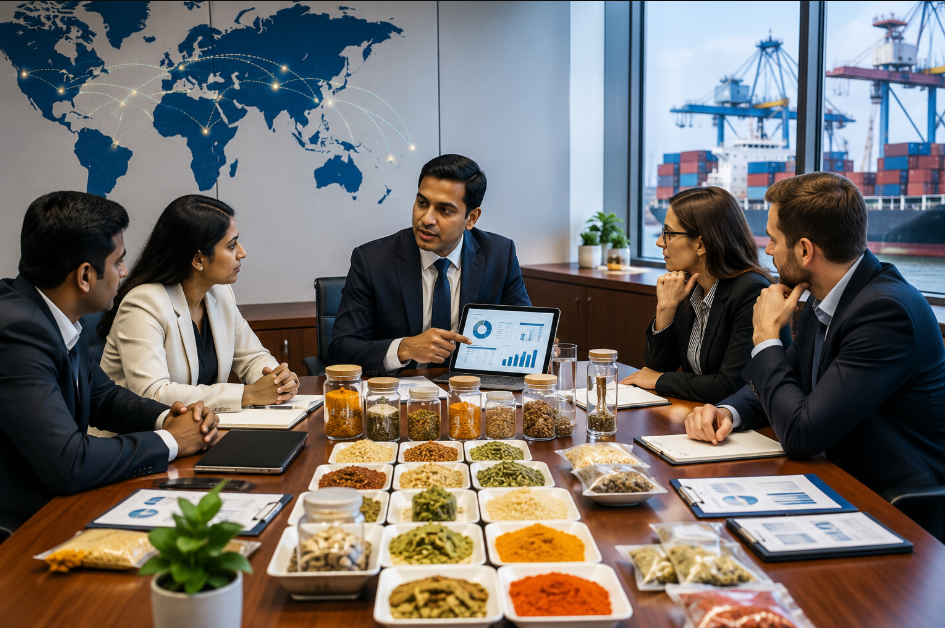
Think of ISO 22000 as a complete roadmap for food safety. Instead of checking the quality of just one product, it focuses on how your entire business manages food safety—from sourcing raw materials to delivering the final product. It establishes a structured Food Safety Management System (FSMS) that helps businesses identify risks before they become problems.
For example, if you’re exporting cumin seeds, ISO 22000 ensures that every stage—from cleaning and processing to packaging and shipping—is monitored using internationally accepted food safety practices. Rather than reacting to food safety issues after they occur, ISO 22000 encourages businesses to prevent them in advance. That’s one of the biggest reasons why international buyers trust suppliers who are ISO 22000 certified.
Why is ISO 22000 Important for Food Export?
Let’s consider a simple example. Two Indian companies export the same quality turmeric powder. Both offer similar prices. Both promise timely delivery. However, one company follows ISO 22000 while the other does not. Which supplier is likely to earn the buyer’s confidence? In most cases, the certified exporter has a clear advantage because ISO 22000 shows that food safety isn’t left to chance—it’s managed through documented systems and regular monitoring.
For buyers importing food products worth thousands of dollars, this reduces business risk. That’s why many international importers prefer suppliers with recognized food safety certifications.
Benefits of ISO 22000 Certification for Exporters
Obtaining ISO 22000 Certification isn’t just about satisfying buyers—it’s an investment in the long-term growth of your business.
1. Builds International Buyer Trust
Food importers want suppliers they can depend on. ISO 22000 demonstrates that your company follows internationally recognized food safety standards, making buyers more confident in doing business with you.
2. Opens Doors to Global Markets
Many retailers, distributors, and food processing companies prefer suppliers with internationally recognized certifications. Having ISO 22000 can improve your chances of entering premium export markets.
3. Reduces Food Safety Risks
Instead of fixing problems after they occur, ISO 22000 helps businesses identify potential hazards early. This reduces contamination risks and minimizes product recalls.
4. Improves Internal Processes
Implementing ISO 22000 encourages better documentation, clearer responsibilities, improved employee training, and more efficient workflows. The result is smoother day-to-day operations.
5. Strengthens Your Brand Reputation
Certification sends a strong message that your company values quality, consistency, and food safety. Over time, this can help build stronger relationships with international buyers.
Who Should Get ISO 22000 Certification?
ISO 22000 is suitable for almost every business involved in the food supply chain. This includes:
- Spice exporters
- Rice exporters
- Pulse exporters
- Oilseed exporters
- Fresh fruit exporters
- Vegetable exporters
- Herbal product manufacturers
- Tea and coffee exporters
- Food processing companies
- Packaging companies
- Cold storage facilities
- Warehouses
- Food logistics providers
Whether you’re a startup exporter or an established company, ISO 22000 can improve your credibility in international markets.
Key Components of ISO 22000
One of the reasons ISO 22000 is trusted worldwide is because it combines several food safety principles into a single management system. Some of its key components include:
Food Safety Management System (FSMS)
Creates a structured framework for maintaining food safety throughout the organization.
Hazard Analysis
Identifies biological, chemical, and physical hazards before they become serious problems.
HACCP Principles
Applies Hazard Analysis and Critical Control Point (HACCP) methods to control food safety risks.
Prerequisite Programs (PRPs)
Maintains hygiene, sanitation, pest control, equipment maintenance, and employee health practices.
Continuous Improvement
Encourages businesses to regularly review and improve their food safety systems.
A Real-Life Example
Imagine you’re exporting dehydrated onions to a supermarket chain in Europe. The buyer asks for evidence that your manufacturing facility follows internationally accepted food safety practices. Without ISO 22000, you may need to provide extensive documentation and still struggle to gain the buyer’s confidence.
With ISO 22000 Certification, you’ve already demonstrated that your company follows a globally recognized Food Safety Management System. For many buyers, that makes supplier approval much easier.
Documents Required for ISO 22000 Certification
Before applying for ISO 22000 Certification, it’s a good idea to organize your business records. While the exact requirements may vary depending on the certification body, most businesses are expected to provide documents that show they have an effective food safety management system in place.
Commonly required documents include:
- Business registration certificate
- Import Export Code (IEC)
- FSSAI License
- Food Safety Policy
- Standard Operating Procedures (SOPs)
- HACCP plan (if available)
- Process flow diagrams
- Employee training records
- Internal audit reports
- Risk assessment documents
- Supplier approval records
- Product specifications
- Cleaning and sanitation procedures
- Pest control records
- Production and quality records
Keeping these documents updated not only speeds up the certification process but also makes your business more organized.
Read more here about:
- HACCP Certification for Food Export
- Halal Certification for Food Export: Complete Guide
- FSSAI License for Food Export
- APEDA Registration: Complete Guide
- Phytosanitary Certificate
- Fumigation Certificate
- Certificate of Origin
- Commercial Invoice
These resources help exporters understand the complete export compliance process.
Step-by-Step ISO 22000 Certification Process
If you’re applying for ISO 22000 for the first time, the process might seem complicated. In reality, it follows a clear sequence of steps.
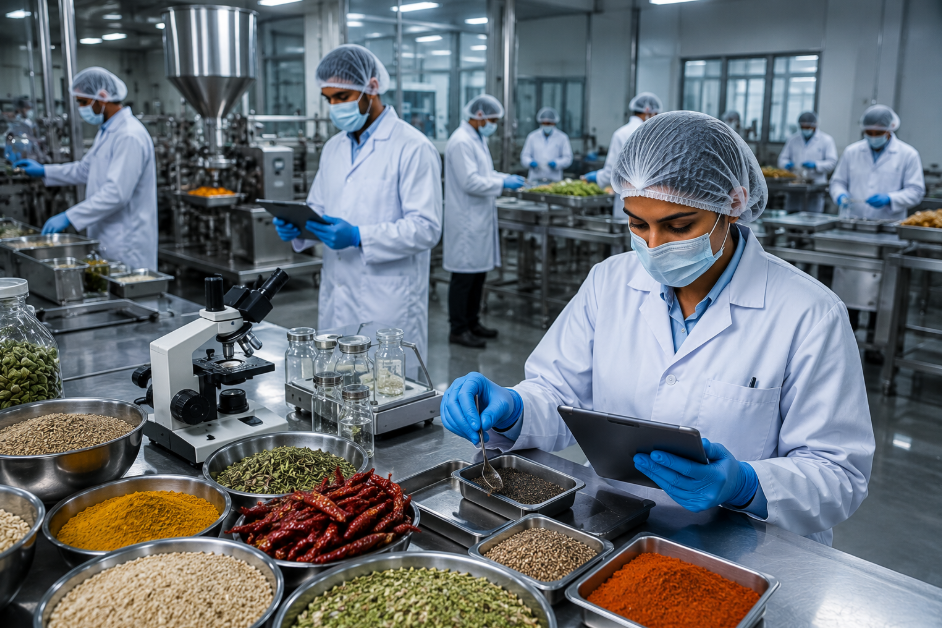
Step 1: Understand Your Current System
Start by reviewing how your business currently manages food safety. Ask yourself questions like:
- Are food safety procedures documented?
- Are employees trained regularly?
- Is every stage of production monitored?
This helps identify areas that need improvement before the certification audit.
Step 2: Develop Your Food Safety Management System
Next, create or update your Food Safety Management System (FSMS). This includes:
- Food safety policies
- Operational procedures
- Risk assessments
- Monitoring plans
- Corrective action procedures
The goal is to ensure that food safety becomes part of your daily operations rather than just paperwork.
Step 3: Train Your Team
Even the best food safety system won’t work if employees don’t understand it. Training should cover topics such as:
- Personal hygiene
- Safe food handling
- Cleaning procedures
- Hazard identification
- Emergency response
- Documentation practices
A well-trained team is one of the strongest indicators of a reliable food business.
Step 4: Conduct Internal Audits
Before inviting an external auditor, inspect your own system. Internal audits help identify weaknesses and give you an opportunity to fix them before the official assessment. Think of it as a practice run before the final examination.
Step 5: Certification Audit
An accredited certification body will visit your facility to evaluate whether your Food Safety Management System complies with ISO 22000 requirements. The auditors may review:
- Production areas
- Storage facilities
- Employee practices
- Documentation
- Cleaning procedures
- Quality control records
They may also interview employees to understand how food safety procedures are followed in day-to-day operations.
Step 6: Receive Your Certification
If your business successfully meets the requirements, you’ll receive your ISO 22000 Certification. Congratulations! This demonstrates to buyers that your organization follows internationally recognized food safety practices.
Step 7: Maintain Compliance
Certification isn’t a one-time achievement. To keep your certification valid, you’ll need to:
- Continue following food safety procedures
- Conduct regular internal audits
- Keep employee training up to date
- Address any non-conformities promptly
- Successfully complete periodic surveillance audits
Consistent compliance is what keeps your certification—and your reputation—strong.
Common Mistakes Exporters Should Avoid
Many businesses delay certification because of small but avoidable mistakes. Here are some of the most common ones:
Poor Documentation
Incomplete or outdated records make it difficult to prove compliance during an audit.
Treating ISO 22000 as Just Paperwork
Certification isn’t about collecting documents. It’s about building a culture of food safety across the organization.
Ignoring Employee Training
Employees play a critical role in maintaining food safety. Without proper training, even a well-designed system can fail.
Weak Supplier Management
The quality of your raw materials directly affects your final product. Work with trusted suppliers and maintain proper supplier records.
Skipping Internal Audits
Internal audits help you identify problems before external auditors do.
Delaying Corrective Actions
If an issue is identified, address it immediately instead of postponing improvements.
ISO 22000 vs HACCP
Many exporters assume ISO 22000 and HACCP are the same. While they’re closely related, they serve different purposes.
| ISO 22000 | HACCP |
|---|---|
| International Food Safety Management System | Food safety methodology |
| Covers the entire management system | Focuses mainly on hazard analysis |
| Includes HACCP principles | Does not include management system requirements |
| Requires continual improvement | Primarily focuses on food safety hazards |
| Suitable for the complete food supply chain | Mainly focuses on production processes |
In simple terms, HACCP is an important part of ISO 22000, but ISO 22000 goes much further by covering the entire food safety management system.
Why Choose Maati Farms?
At Maati Farms, quality and food safety are more than just industry requirements—they’re part of how we build lasting relationships with customers around the world. We source premium agricultural products from trusted growers and follow strict quality control measures throughout procurement, processing, packaging, and export.
Our commitment to internationally accepted food safety practices helps ensure that every shipment meets the expectations of global buyers. Whether you’re looking for spices, herbs, oilseeds, dehydrated vegetables, rice, or other agricultural commodities, Maati Farms is dedicated to delivering products with consistency, transparency, and export-ready quality.
Conclusion
International buyers don’t simply purchase products—they invest in suppliers they can trust. ISO 22000 Certification for Food Export demonstrates that your business takes food safety seriously and follows globally recognized practices to protect product quality throughout the supply chain.
Whether you’re entering export markets for the first time or expanding your international presence, implementing ISO 22000 can strengthen buyer confidence, improve operational efficiency, and help your business stand out in an increasingly competitive market. Food safety is no longer just a compliance requirement—it’s a competitive advantage.
Frequently Asked Questions
Is ISO 22000 mandatory for food exporters?
No. It is generally not a legal requirement, but many international buyers and retailers prefer suppliers with ISO 22000 Certification because it demonstrates a strong commitment to food safety.
How long does it take to obtain ISO 22000 Certification?
The timeline depends on the size of your business and how prepared your Food Safety Management System is. For many organizations, the process can take anywhere from a few weeks to several months.
Is ISO 22000 suitable for small businesses?
Yes. Businesses of all sizes—including small exporters, food processors, and startups—can implement ISO 22000 if they meet the standard’s requirements.
What’s the difference between ISO 22000 and HACCP?
HACCP focuses on identifying and controlling food safety hazards, while ISO 22000 is a complete Food Safety Management System that includes HACCP principles along with management processes, documentation, communication, and continual improvement.
Does ISO 22000 help increase exports?
Yes. Although certification doesn’t guarantee export orders, it can improve buyer confidence, strengthen your reputation, and make your business more attractive to international importers who prioritize food safety and quality standards.