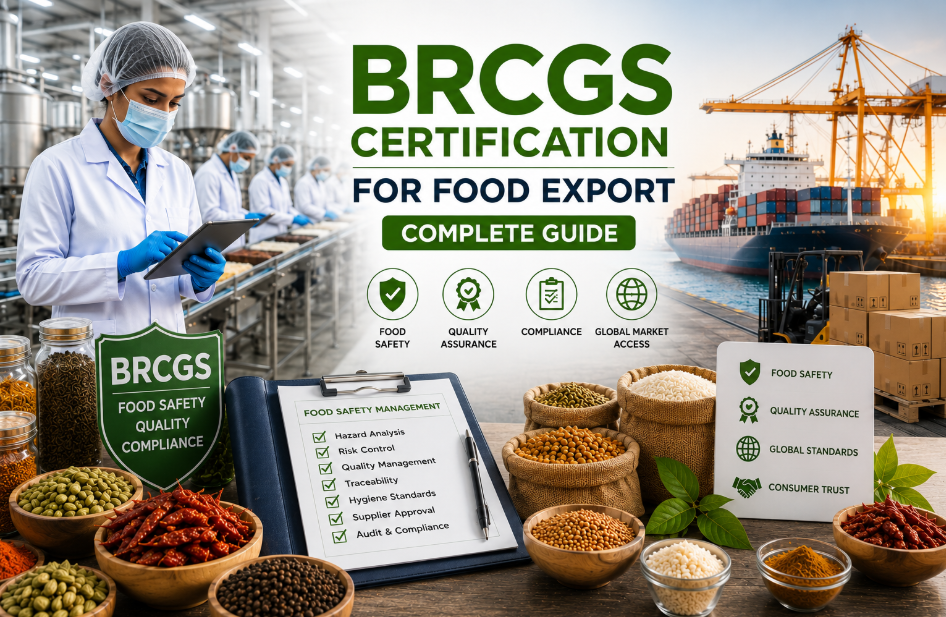
Exporting food products today is about much more than offering competitive prices. International buyers expect suppliers to follow globally recognized food safety standards that ensure products are safe, consistent, and legally compliant. One certification that has become highly respected across the global food industry is BRCGS Certification for Food Export.
Whether you export spices, rice, pulses, dehydrated vegetables, sesame seeds, herbs, or processed foods, BRCGS certification can significantly improve buyer confidence and open doors to premium international markets. In this guide, we’ll explain what BRCGS certification is, why it matters, how the certification process works, and how it benefits food exporters from India.
What is BRCGS Certification?
BRCGS stands for Brand Reputation through Compliance Global Standards. Originally developed by the British Retail Consortium, it has grown into one of the world’s most trusted food safety certification standards. The certification helps food manufacturers and exporters demonstrate that they produce food under controlled, hygienic, and internationally accepted conditions.
Today, thousands of manufacturers in more than 130 countries use BRCGS certification to supply products to supermarkets, retailers, importers, and food service companies worldwide. Instead of inspecting only the final product, BRCGS evaluates the entire production system—from sourcing raw materials to processing, packaging, storage, and shipment.
This comprehensive approach helps ensure that every exported product consistently meets food safety and quality expectations.
Why is BRCGS Important for Food Export?
International buyers don’t just purchase products—they invest in reliable suppliers. A buyer importing food products wants assurance that every shipment will meet the same quality standards, comply with food safety regulations, and protect consumers. BRCGS certification provides that assurance.
It demonstrates that your company has implemented effective food safety management systems, maintains strict hygiene practices, follows documented quality procedures, and continuously monitors production risks.
Many retailers and food brands in the UK, Europe, the Middle East, Australia, and several other international markets actively prefer or require BRCGS-certified suppliers. For exporters, this certification often becomes a valuable business advantage rather than just another compliance requirement.
Which Food Businesses Should Consider BRCGS Certification?
BRCGS certification is suitable for nearly every business involved in food manufacturing and export. It is especially valuable for:
- Spice exporters
- Rice exporters
- Pulse manufacturers
- Sesame seed exporters
- Groundnut exporters
- Dehydrated vegetable manufacturers
- Food ingredient suppliers
- Ready-to-eat food manufacturers
- Frozen food producers
- Food packaging companies
- Private label food manufacturers
- Contract food processors
If your goal is to supply international retailers or premium buyers, obtaining BRCGS certification can significantly strengthen your credibility.
Benefits of BRCGS Certification for Exporters
Builds International Buyer Confidence
Global buyers prefer suppliers who follow internationally recognized food safety systems. BRCGS certification gives importers confidence that your products are manufactured under controlled and hygienic conditions.
Improves Market Access
Many supermarkets, retail chains, and food brands require suppliers to hold recognized food safety certifications. Having BRCGS certification makes it easier to qualify as an approved supplier and enter premium export markets.
Reduces Food Safety Risks
The certification focuses heavily on identifying and controlling food safety hazards before products leave the factory. This helps reduce contamination risks, product recalls, and customer complaints.
Strengthens Brand Reputation
Certification demonstrates professionalism and commitment to quality, helping exporters build stronger long-term relationships with buyers.
Improves Internal Operations
Implementing BRCGS standards often results in:
- Better documentation
- Improved traceability
- More efficient production
- Better employee training
- Stronger quality management systems
Many businesses experience operational improvements alongside certification.
How to Get BRCGS Certification for Food Export
Getting BRCGS certified may seem complex at first, but breaking it into smaller steps makes the process much easier to understand. Here’s how most food businesses obtain BRCGS certification:
Step 1: Understand the BRCGS Standard
Start by reviewing the latest BRCGS Food Safety Standard and understanding how it applies to your business. This helps identify any gaps between your current practices and the certification requirements.
Step 2: Improve Your Food Safety System
Before applying for certification, ensure your facility has proper food safety procedures in place. This includes:
- Hygiene and sanitation practices
- Pest control measures
- Product traceability
- Quality control procedures
- Employee training
- Equipment maintenance
- Documentation and record keeping
A well-managed food safety system forms the foundation of BRCGS compliance.
Step 3: Conduct an Internal Audit
Review your processes before the official audit. An internal audit helps identify areas that need improvement and reduces the chances of non-conformities during the certification assessment.
Step 4: Schedule the Certification Audit
Choose an accredited certification body to perform the audit. The auditor will inspect your facility, review documentation, observe production processes, and interview employees to verify compliance with BRCGS requirements.
Step 5: Receive Your Certification
If your business successfully meets all the required standards, you’ll receive your BRCGS certification. Regular surveillance and recertification audits help ensure that food safety standards continue to be maintained over time.
Documents Required for BRCGS Certification

Although the exact requirements vary depending on your products and facility, exporters generally need the following documents:
- Business Registration Certificate
- FSSAI License
- Import Export Code (IEC)
- Food Safety Policy
- HACCP Plan
- Standard Operating Procedures (SOPs)
- Cleaning and Sanitation Records
- Pest Control Records
- Employee Training Records
- Product Specifications
- Supplier Approval Records
- Internal Audit Reports
- Corrective Action Records
- Product Traceability Records
Maintaining accurate documentation not only supports certification but also builds confidence with international buyers.
Read more here about:
- HACCP Certification for Food Export
- ISO 22000 Certification for Food Export: Complete Guide
- Halal Certification for Food Export: Complete Guide
- FSSAI License for Food Export
- APEDA Registration: Complete Guide
- Phytosanitary Certificate
- Fumigation Certificate
- Certificate of Origin
- Commercial Invoice
These resources help exporters understand the complete export compliance process.
Common Mistakes Exporters Should Avoid
Many businesses delay certification because of avoidable mistakes. Here are some of the most common ones:
Poor Documentation
Missing or incomplete records can result in non-conformities during the audit.
Ignoring Employee Training
Employees should understand hygiene practices, food safety procedures, and their individual responsibilities.
Weak Supplier Management
Food safety begins with raw materials. Working with unreliable suppliers increases quality risks.
Inadequate Cleaning Procedures
Regular sanitation and proper maintenance are essential for maintaining food safety standards.
Skipping Internal Audits
Internal audits help identify problems before the official certification audit takes place.
BRCGS vs HACCP vs ISO 22000
Many exporters wonder which certification they actually need. Here’s a simple comparison.
| Certification | Primary Focus | Best For |
|---|---|---|
| HACCP | Hazard identification and control | Food manufacturers starting their food safety journey |
| ISO 22000 | Complete Food Safety Management System | Businesses looking for an internationally recognized management standard |
| BRCGS | Food safety, quality, legal compliance, and retailer requirements | Exporters supplying supermarkets, retailers, and premium international buyers |
These certifications complement each other, and many successful exporters choose to implement more than one depending on their target market.
Why Choose Maati Farms?
At Maati Farms, we believe that consistent quality is the foundation of successful food exports.
Our team works closely with trusted farmers and processing partners to ensure that agricultural products meet international quality expectations. From sourcing and processing to packaging and export, we focus on maintaining high standards that global buyers can rely on.
Whether you’re looking for premium spices, sesame seeds, rice, pulses, herbs, dehydrated vegetables, or other agricultural commodities, Maati Farms is committed to delivering products that are safe, reliable, and export-ready.
Conclusion
As global food safety standards continue to evolve, certifications like BRCGS are becoming increasingly important for exporters looking to build long-term relationships with international buyers.
BRCGS Certification for Food Export demonstrates your commitment to food safety, product quality, and operational excellence. It helps improve buyer confidence, opens access to premium markets, and strengthens your reputation in the competitive global food industry.
If you’re planning to expand your food export business, investing in internationally recognized certifications like BRCGS can give you a significant competitive advantage.
Frequently Asked Questions
Is BRCGS Certification mandatory for food exporters?
No. However, many international retailers, supermarkets, and food brands require suppliers to have BRCGS certification before doing business.
Who can apply for BRCGS Certification?
Food manufacturers, processors, packers, exporters, ingredient suppliers, and private label manufacturers can all apply for BRCGS certification.
How long does BRCGS Certification remain valid?
BRCGS certification is generally valid for one year and requires regular audits for renewal.
Is BRCGS better than HACCP?
Not necessarily. HACCP focuses on identifying food safety hazards, while BRCGS is a broader standard that includes food safety, quality management, legal compliance, and operational controls.
Can small food businesses get BRCGS Certification?
Yes. Businesses of all sizes can obtain BRCGS certification if they meet the required standards and successfully complete the audit process.